Rising Together- Ascension Sunday
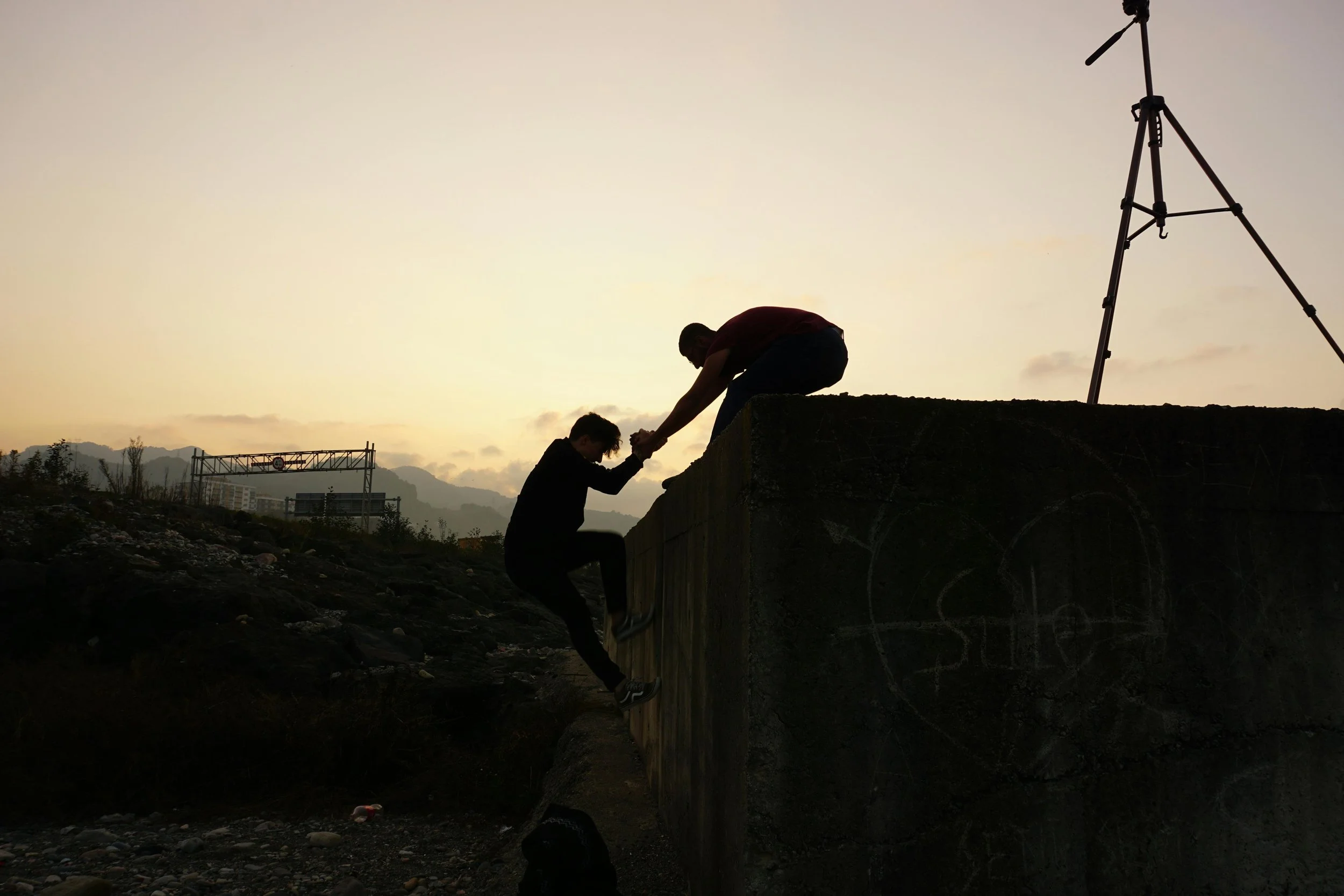
“And so, lifting as we climb, onward and upward we go, struggling and striving, and hoping that the buds and blossoms of our desires will burst into glorious fruition 'ere long.” — Mary Church Terrell
Rising Together- The Upward Call of Love
Dear friends, today we stand at a peculiar intersection.
In the liturgical calendar, we look up at the Ascension—Jesus rising, returning to the Creator, leaving the dusty roads of Galilee behind. But in our history, we stand on the shoulders of the Black women of the nineteenth-century Club Movement, who gave us a different directional mandate: "Lifting as We Climb.”
At first glance, these two things seem to pull in opposite directions:
Ascension looks like leaving; lifting looks like staying.
Ascension looks like individual glory; lifting looks like collective labor.
But if we look closer, we realize that the Ascension was never about Jesus escaping the world—it was about Him expanding His presence within it.
To understand this deeply, we must turn to womanist theology. For those unfamiliar with the term, "womanist" was first coined by author Alice Walker and later developed by theologians to describe a perspective rooted in the history, struggles, and everyday experiences of Black women. While traditional feminism often focused primarily on gender, and black liberation theology focused primarily on race, womanist theology looks at the intersection of race, gender, and economic class. It teaches us that God does not exist solely in the "high and lifted up" places of the stratosphere. God is found in the climb.
Mary Church Terrell and the founders of the National Association of Colored Women knew that for a Black woman in America, "rising" was never an individual act. If you got to the top of the hill alone, you hadn't actually arrived; you were just isolated. Here in Vermont, we know that hiking a mountain trail is safer and more meaningful in a pack. True Ascension is communal.
Years ago, while organizing a world conference of Young Adult Quakers, I witnessed a beautiful, lived example of this exact communal ascension. A young Friend from Australia had been asked to sing a song before the entire gathering as a ministry during our daily worship. When her time came, she did not walk up to the microphone alone. She walked onto the stage hand-in-hand with another young woman. Before she sang, she looked out at us and said, “It always helps me be brave to have a dear friend by my side. Together we can do hard things.”
She understood instinctively what womanist theology articulates intellectually: that our bravery is not a solitary commodity. We do hard things by sharing the weight of the stage.
When Jesus rose, He didn't say, “Bye, You’re on your own now!” He said, "I am sending the Spirit so that you can do even greater works." He was lifting the floor of what was possible for humanity.
Lifting as we climb means we refuse the "politics of respectability"—the exhausting societal trap that says marginalized people must behave perfectly and look "respectable" just to deserve basic rights. It says that my liberation is tied to the friend in the back row, the person on the corner, and the child in the underfunded school. We don't just want a seat at the table; we want to lift the whole house.
To understand the weight of the climb, we must look to the work of womanist ethicist Dr. Emilie M. Townes. In her groundbreaking book, Womanist Ethics and the Cultural Production of Evil, she challenges us to see how society creates "shadow stories" about Black lives—stereotypes and myths that try to keep people pinned to the ground. Townes reminds us that we are often fighting against a "matrix" of systems that normalize injustice, making structural oppression look like just the way things are.
The Ascension, then, is a radical act of transgression and resistance. It is refusing to believe the lies the dominant culture tells about human worth. When we climb, we aren't just moving upward; we are dismantling the structures of evil that say some lives are more disposable than others.
As Townes suggests, we must engage in "deep walking hope"—a hope that is not a passive wish, but a prophetic fury that refuses to separate our spirits from our bodies. We don't just wait for a miracle; we become the miracle by disrupting the "everydayness" of injustice.
This kind of disruption is exactly what we engage in when we choose to walk outside the status quo. It is a hope that puts its boots on the ground.
We see this prophetic disruption when someone chooses to wear a keffiyeh to show physical solidarity with the Palestinian people. We see it when students participate in a Day of Silence to cause the world to notice those who have been systematically silenced. We see it when neighbors put on a black armband to protest the normalized violence in our streets.
We have seen this disruption on the macro-level in our historic marches, protests, and collective social actions. But womanist ethics reminds us that the matrix of oppression is also disrupted on the micro-level: in the courageous act of walking children to school through military checkpoints, in physically standing alongside a stranger who is being harassed on the street, or in offering radical, intentional acts of kindness that refuse to let hostility have the last word.
So, how do we respond to the angels in Acts who asked the disciples, "Why do you stand here looking into the sky?" The angels were essentially saying: "Stop staring and start stirring."
The Quaker tradition and Black activists alike have challenged us to "Let your life speak." This is the ultimate form of Ascension. Your life speaks when your daily walk reflects the heights you’ve reached and the hands you’re holding.
To let your life speak is to realize that you are the "living epistles" of the Gospel. You are the sermon someone is reading today.
When you advocate for a living wage, your life is speaking.
When you mentor a young person who the world has written off, your life is speaking.
When you refuse to be diminished by a society that fears your brilliance, your life is speaking.
The beauty of the Ascension is that Jesus went up so that the Holy Spirit could come in. We are now the hands that lift. As Emilie Townes emphasizes, this work is activist care. It’s being present on the front lines, whether in the courtroom, the classroom, or the congregation.
I am reminded of a time in my own ministry when I witnessed this precise form of activist care while serving as a chaplain in a large Boston hospital. A man lay dying in the Intensive Care Unit, and his husband sat faithfully beside him. As I sat and visited with them in that sacred, heavy space, I learned they were Catholic. They deeply desired for the dying husband to receive the Sacrament of the Sick—the Last Rites. Yet, they were paralyzed by fear. In their vulnerability, they were terrified that the Catholic priest on call at the hospital would judge their marriage, reject their love, and refuse them the sacrament.
Knowing the priests in the chaplaincy department well, I knew the internal landscape of that institution. I knew which doors to open. I made a targeted call to a specific priest—one I knew would see their love as holy. Watching my colleague step into that ICU room, cross over the institutional shadows of rejection, and show up for that couple with unadulterated pastoral love brought me to tears. That priest did not just offer a ritual; he disrupted the everydayness of exclusion.
Friends, don't just look for a miracle in the clouds. Look for the miracle in the person standing next to you.
If you are rising in your career, who are you pulling up with you?
If you are rising in your spiritual maturity, whose hand are you holding in the valley?
We do not climb to get away from the struggle; we climb to gain the vantage point and the strength to pull the struggle out of the dirt. As Townes says, our goal isn't just survival—it is flourishing.
As you leave this sanctuary, remember: You are an Ascending people. But you are not rising alone. We are a chain of grace, a ladder of love, a movement of Spirit. Go out and let your life speak of a Holy Spirit who doesn’t just exist in the heavens, but a Holy Spirit who is actively lifting us, through us, until we all reach the mountain top together.
Amen.