Easter 2026: Good News is Alive!
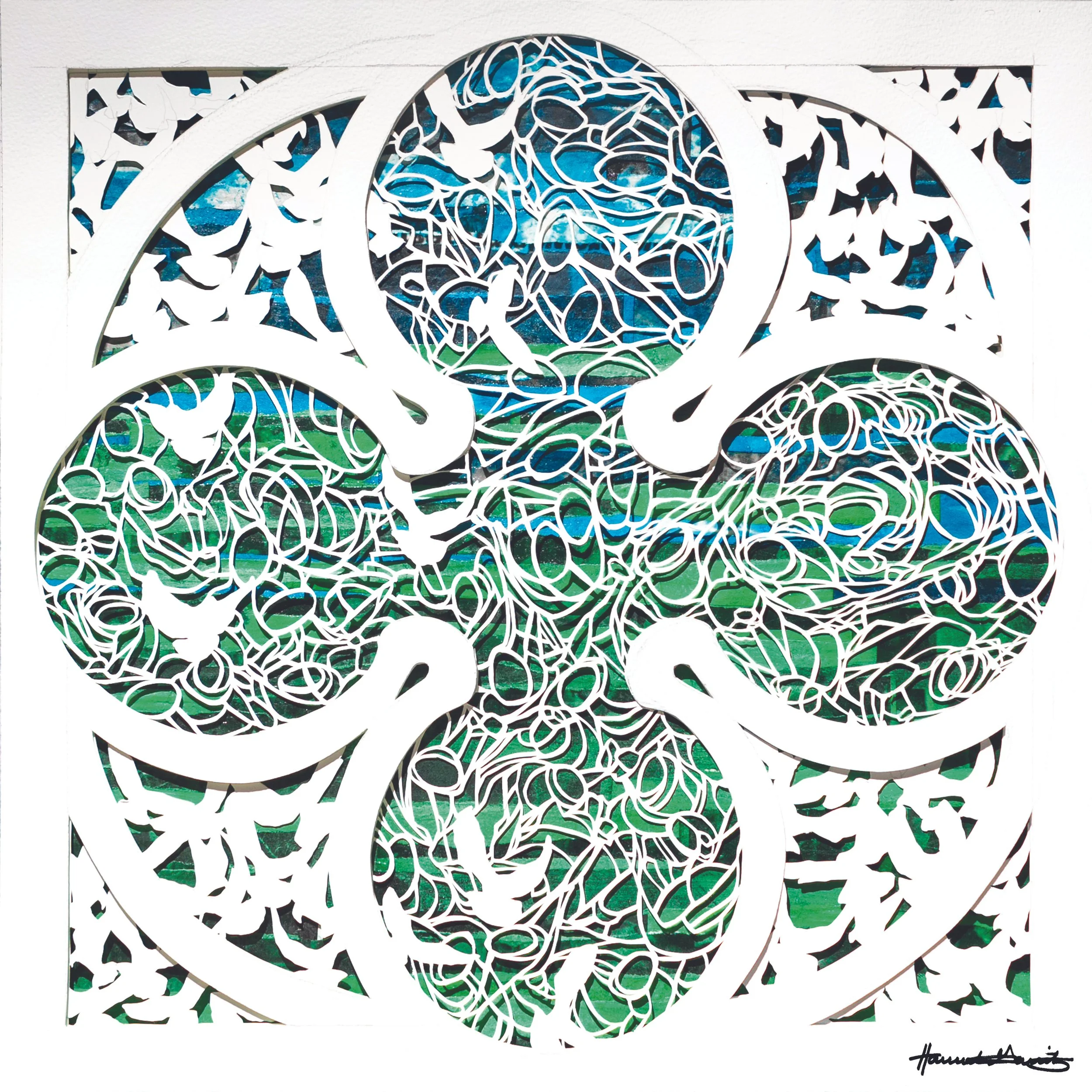
“Because Jesus knows what we will always need to be reminded of: the good news is greater than any tyrant. The good news of God is more alive than anything that tries to kill God, more alive than anything that tries to kill the imago dei in all of us. Kings come and kings go, and we may tremble still—but God? God shakes the earth with power and might be so tender and so fresh it can make a tomb bloom with new life.” –Rev. Lizzie McManus-Dail
The Subversive Bloom: Trusting Resurrection in the Shadow of Empire
We often tell the Easter story as "happily ever after." The stone is rolled away, the choir sings, and we go to brunch. But if we look closer at the Gospel accounts—especially the book of Matthew—the atmosphere isn’t just joyful; it’s jittery. It’s heavy.
There is a strange, uncomfortable reality in the text: Jesus is alive, death is vanquished, but the world hasn’t actually changed. The men who swung the whips are still getting paid. The soldiers who mocked Jesus with vinegar are still at their jobs. Pontius Pilate is still sitting in his palace, likely eating the same breakfast he ate on Good Friday.
We often imagine the disciples at a long, mahogany table, nodding solemnly as they realize the prophecy was true. But the text suggests they were vibrating with a kind of holy trauma. In Matthew, there is an earthquake. The ground itself is rejecting the status quo. When you experience an earthquake, you don’t immediately start singing hymns; you check the foundations. You look at the walls and wonder if they’re going to hold.
This is the "jittery" Easter. If we are going to be a Resurrection people, we have to admit that we are a people who have been shaken. We are people who know what it’s like for the ground to give way, and we are still finding our footing in a world where the "big powers" are still posturing, even though the foundation under their feet has just cracked wide open.
As we reflect today, we have to ask: How can we trust resurrection when the old world is still so present? When the systems of death still seem to be sitting on the world’s throne? We are standing in the garden, but if we are honest, our nostrils are still full of the scent of the tomb. In the garden of our world, there is so much rot—injustice, grief, and the persistent shadows of the "crosses" we see in our news cycles. We want a pristine spring morning, but we find ourselves standing in the compost heap of history.
Let’s look closer at the imagery of the garden. In nature, nothing "new" happens without "old" things breaking down. For a seed to sprout, it must be surrounded by the remains of last year’s growth. The dead leaves, the fallen fruit, the decayed stalks—this is the "compost" that feeds the future.
I have this core memory of a time when I was a teenager. I was at a Quaker youth conference, in the springtime. My friends and I were throwing a frisbee around outside of the meeting house where we were staying for the weekend. I missed catching the frisbee and it landed in a squishy mess of springtime. As I picked up the frisbee, I noticed that where it had fallen, was in the mush of a decayed pumpkin. However, the seeds from that pumpkin had taken root and their sprouts rose up to meet the sun. There was something about that moment that made me pause; it made me understand some profound truth about how new life can come from compost, from death and dying.
That decayed pumpkin wasn't a mistake; it was a laboratory. If you’ve ever kept a compost bin, you know it’s not a pretty place. It’s slimy, it smells of fermentation, and it’s full of things that failed. It’s where the "ugly" parts of the harvest go to disappear. But if you turn that soil, you find it’s hot. There is a literal heat generated by the breakdown of old life. I think about the "heat" in our own lives—the friction of our grief, the burning of our regrets. We try to cool it down, to hide the "rot" under a Sunday best. But what if that heat is exactly what the seed of the Holy needs to germinate? What if God isn't waiting for you to get "cleaned up" before the Resurrection happens, but is instead using the very warmth of your struggle to crack the shell of who you used to be?
In our own lives, we often want to skip the "decay" part. We want the bloom without the breakdown. But the Resurrection tells us that God is the ultimate recycler. God doesn't throw away our trauma, our "haunting dreams of whips and rooster crows," or our failures. God gathers them up and turns them into the very nutrients we need to grow.
How can we trust resurrection? By looking at the compost. By realizing that the very things the Empire used to try and destroy Jesus—the cross, the nails, the spear—became the soil from which the early church sprouted. The "rot" of Friday became the "richness" of Sunday. If God can use a Roman execution to feed a movement of love, what can God do with the "rot" in your life?
The early Quaker Lucretia Mott, a woman who spent her life staring at the "rot" of slavery and the "decay" of injustice, once said: "Liberty is not less a blessing, because oppression has so long [confused] the mind that it cannot appreciate it". Mott knew that the Holy doesn't wait for the decay to disappear before it starts its work; it grows through the decay until the mind can finally feel the freedom of the open sky.
The most common phrase in the Bible—uttered by angels, prophets, and now the risen Christ—is "Do not be afraid." In our progressive faith, we often look for the "why" behind the "what." Why would Jesus start his new life with these words? “Do not be afraid.”
Perhaps it’s because the disciples were finally seeing the sheer, terrifying scale of who Jesus was. This wasn't just the friend they teased or the man whose dinner they cooked. This was Emmanuel—God-with-us. To realize that the Source of All Being is standing in front of you, showing you that even a Roman execution is just "compost" for God’s next act... that is enough to make anyone tremble.
But there is a second reason for fear. To follow a resurrected Christ is to follow someone who has officially become a threat to the status quo. If the Empire can’t kill you, it can’t control you. In the eyes of the state, a person who no longer fears death is a dangerous person. To be "Empire-proof" isn't about being bulletproof; it’s about being "fear-proof."
Early Friends spoke of the 'Lamb’s War.' They understood that the most radical thing you can do in a world built on the threat of death is to live as though death has no sting. If the worst thing the Empire can do is kill you, and your God specializes in bringing life out of tombs, then the Empire has lost its only move. This is why the Marys run from the tomb with 'fear and great joy.' It’s a terrifying joy. It’s the joy of a prisoner who realizes the cell door has been unlocked from the inside, and now they have to figure out how to live in the wild, wide-open air of God’s Kin-dom.
Jesus tells the Marys to go to Galilee. He tells them to go back to where it all started.
Think about that. He doesn't tell them to go to Jerusalem to stage a coup. He doesn't tell them to go to the palace to demand an apology from Pilate. He tells them to go back to where the sea is salty and blue and the fish are fresh.
Quakers talk about the "Sacrament of the Ordinary." We believe that the Light is found in the everyday, making the bold, almost scandalous claim that the whole of life is sacramental. We don't have a special "holy bread" or "blessed water" because we believe that every meal at every table can be a Lord’s Supper, and every conversation can be a prayer. By sending them back to Galilee, Jesus is saying that the resurrection isn't a one-time magic trick to be gawked at in a holy city; it is a power to be lived out in our kitchens, our workshops, and our churches.
The healing the disciples need isn't found in a grand political victory or a change in the Roman administration; it’s found in the washing in of familiar waters with a new perspective. Jesus is inviting them to take the "seeds" of what they witnessed—the heat of the trauma and the light of the empty tomb—and plant them in the compost of their normal lives.
To live the "Sacrament of the Ordinary" is to realize that the resurrection isn't a historical event to be curated in a museum; it is a possibility to be practiced. It means that the Divine intersection happens in the most mundane moments—in the steam rising from a morning cup of coffee or the rhythm of a hammer against wood. Jesus is saying: The Empire tried to end our story in the city, but we are going back to the margins, back to the sea, to start a movement of love and "Empire-proof" peace that Rome’s architects can’t even imagine. We are turning our ordinary lives into a living laboratory for the Kingdom of God.
And this is where the real struggle happens.We live in a world where "kings" still come and go. We see systems that try to crush the "That of God" in our neighbors, in the marginalized, and in ourselves. It is easy to look at the "thrones" of our world and feel that death is winning.
But the Good News we celebrate today is a protest. It is the claim that the life of God is more "alive" than anything that tries to kill it.
That is the Easter story. The decay is real and it is widespread. But love has grown up towards the sunlight and birthed new life. The Resurrection is the ultimate proof that the "Lamb’s War"—the struggle for peace, justice, and truth—is won not through bigger swords or louder shouts, but through as Rev. Lizzie McManus-Dail wrote, " it is won by a power and might so tender and so fresh it can make a tomb bloom."
Like a sprout pushing through the remains of a fallen tree or a mushy pumpkin, the Life of God uses the very tools of death as nutrients for a new world. We don't just talk about the bloom on Easter; no, we live as the seeds, starting first deep and dark in the compost, and then sprouting, growing and becoming the new life inside us.
We may tremble still. It is okay to be afraid in a world that feels like it’s governed by the oppression of the cross.
But as you leave today, look at the "Pilates" of your life and remember: they don’t have the final word. The earth has shaken. The stone is gone. The compost is being turned into a garden.
So, Friends, let us go back to our "Galilee." Let us return to our homes and our work, our families and our activism. Let us return to the salty sea and the fresh fish. But let us go back knowing that the tyrant is temporary, the tomb is empty, and the bloom of new life is unstoppable.
May we walk cheerfully over the earth, answering that of God in everyone, and trusting the bloom. The Good News is greater than the throne. The Good News is alive!
Amen, and Alleluia.